

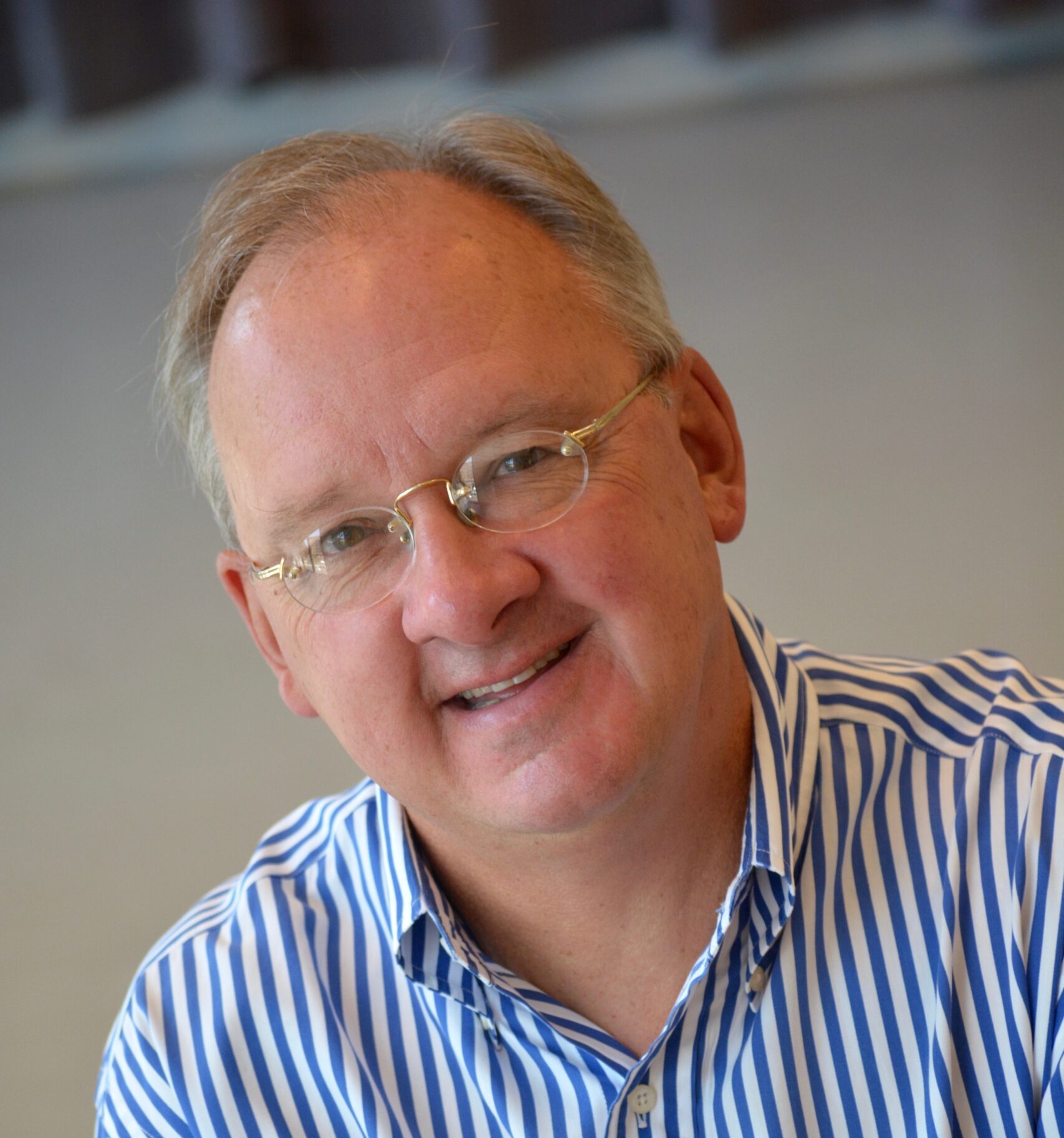
Peter Mansfield is a conductor, composer, arranger, orchestrator, and pianist whose musical career has been intertwined with the Hasty Pudding Theatricals for nearly five decades. After growing up outside Boston, studying music at Harvard, and directing the Harvard Krokodiloes as an undergraduate, Peter joined the Pudding as Assistant Music Director on HPT 129: Cardinal Knowledge—a role that unexpectedly became the launchpad for his life’s work. Today, he lives on Cape Cod, “about two-thirds retired, but still very much active,” and continues to work closely with the Pudding and the Kroks.
Alumni Spotlight
Peter Mansfield
Music Director, Arranger, Orchestrator – HPT 129 to Today
Interview conducted by Alumni Coordinator Natalie Krevitt ’26
Q: What first drew you to music?
I was a pretty typical kid: I played a lot of sports, but I also took piano lessons, which I really loved. By high school, I was involved in musical theater and was bitten by the bug there. When I arrived at Harvard, I joined the Kroks very early on. I had done very little arranging before, but arranging for the Kroks became something I deeply enjoyed, and I’m still doing it today. I also spent summers on Cape Cod performing musical theater with Krok classmates and friends from New England Conservatory. Those summers were where all the fires really started to light in terms of imagining a musical career.
Q: You began arranging and eventually directing the Harvard Krokodiloes while still an undergrad. How did you balance that and your academic demands?
I was a music concentrator, so it was pretty organic. The Kroks rehearsed at the end of the day, so I didn’t miss classes or anything like that. I was so enjoying being a part of the Kroks and arranging for them was exciting, not draining. The musical work and the academic work really fed each other.
Q: When you moved from a cappella arranging to orchestrating for the Hasty Pudding, where the instrumentation varies year to year, how did that shift influence your musical approach?
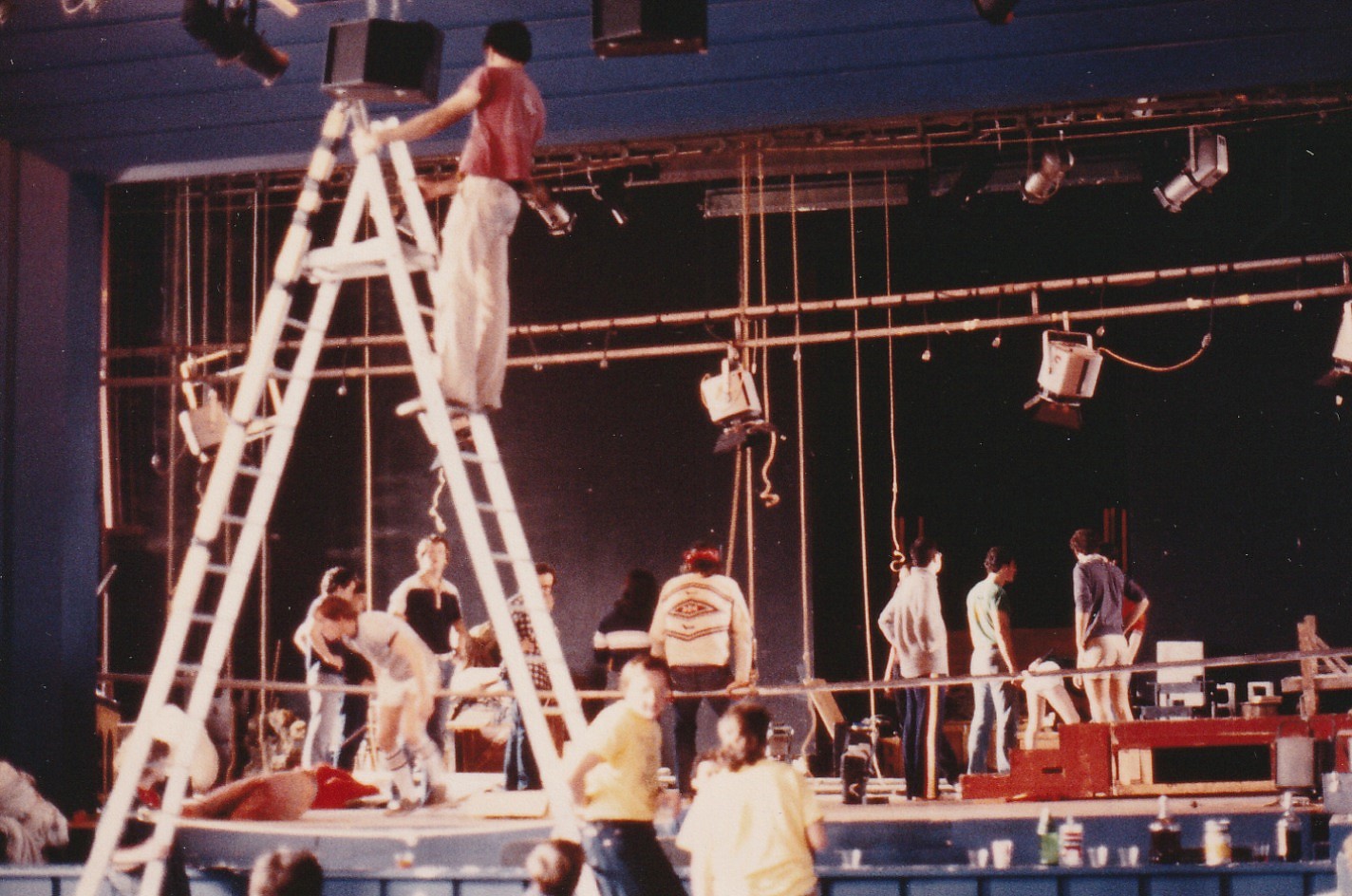
This was a real critical point for me. I was hired as the assistant music director at the end of my senior year in 1977 for HPT 129: Cardinal Knowledge, having never even seen a Pudding show. I assumed I’d just be playing piano and helping with rehearsals, but on day one I met Eric Knight, a leading symphonic pops arranger from New York. Very quickly, we both realized I would need to orchestrate part of the show, something I had never done. I had arranged for the Kroks, but that’s voices, not instruments. And then, a few weeks in, I learned I would also be conducting the show. It was truly a baptism by fire. Thankfully, Eric became a wonderful and willing mentor, even under intense deadlines. I was really learning on the job, and it’s really where my career, as it turned out to go, got launched.
***
In a moment that felt almost scripted, two current Kroks wandered into the theater mid-conversation. The current Music Director introduced himself to Peter, despite the two having exchanged countless emails over the years, they had never met face-to-face. A first-year Krok beamed as he told him, “I recognize you very very vividly from the top of all of our scores, so it’s good to meet a legend!” The moment was warm and full of admiration, a reminder of how deeply Peter’s musical work continues to shape the group.
***
Q: Can you think of any Hasty Pudding productions in the past that were particularly challenging or on the other end of that, a moment or year that was particularly meaningful?
I always return to those first couple of years. I was so inexperienced – the Pudding is a largely professional-quality production, and I was worried that I was not really qualified to do this. I was living in a guest suite in Lowell House alongside Eric Knight because there was simply so much work to do, and there was a huge learning curve. It was frightening and exhilarating at the same time, but during these years, I realized so convincingly that this business is about being self-critical and listening to the work that you’ve done, seeing why it worked or why it didn’t work. I just can’t imagine a better or more nurturing experience than the one I went through, and it was terrifying at times, but gosh on opening night that was the first Pudding show I’d ever seen, and I was conducting it so wow.
Q: How do you approach adapting/arranging songs to fit the specific tone or comedic style of a Hasty Pudding show?
When I’m arranging for the Pudding, it really is a completely different process from arranging for the Kroks. With the Kroks, being an a cappella group, every element has to be handled by the voices—the melody, the accompaniment, the rhythm. For the Pudding, or any instrumental vocal arrangement, you suddenly have the band, and knowing what each instrument is capable of and how to build a sound behind the singers is a really tricky skill to learn. You want to support the singing, you want the band to reflect the style of the song, but you also have to make sure the vocal line stays the focus, unless we’re in the middle of a kickline, which is its own beast!
I had a pretty decent, innate sense of how to write for voices because I started doing that in high school, but I knew nothing about orchestrating for instruments. The challenge is learning how to create a backdrop that fits the style, how to keep the focal moments upfront, and how to balance everything so that the song moves along in an orderly, satisfying way. And because no orchestrator knows how to play every instrument in the orchestra—at least none that I know—you really have to learn how each instrument sounds and what the technical pieces are. It’s a big learning curve. You can’t just take a course and read about it.
For me, it all starts at the beginning when I’m doing the piano–vocal arrangements for the Pudding. I take what the composer has done and start building the arrangement so it can be used in rehearsal with just piano and voice. That becomes the template for what the orchestra is ultimately going to play. And there is no textbook that tells you exactly how to do all of that. You really do have to dive into a very cold pool and hope it works out. But the beauty of it is that I had the chance to start learning all of this at the Pudding—that’s where it began.
Q: You’ve collaborated with the Boston Pops under conductors like John Williams and Keith Lockhart. What have you learned from them, and has that changed your way of arranging or conducting?
I’m wondering if you could imagine what it feels like to be someone just out of college and suddenly invited to Symphony Hall. I remember walking down the hallway for a meeting about a concert I had arranged for, opening the door, and sitting there were John Williams and Steven Spielberg. I did not go into Symphony Hall with a whole lot of experience writing for a full 90-piece orchestra. I had started getting a sense of it from the Pudding and a couple of other small projects, but this was one of the biggest learning environments you could possibly imagine. In a professional orchestra rehearsal, you don’t have the opportunity to make mistakes and fix them. It’s a union rehearsal—the clock is running, you can’t go overtime, and whatever you’ve written has to work the first time. That is terrorizing.
The stakes were a little higher at Symphony Hall with the Boston Symphony and John Williams conducting. Thankfully, it did work, and I learned so much simply by listening to what I had written, just like I had years earlier with my first Pudding arrangements. There was certainly music I wrote that I realized wasn’t optimum for a number of reasons, but I used all of that as a learning experience. I paid very close attention to why something didn’t work, and if you’re perceptive, you learn quickly what you could’ve done to make it better. It was a really stimulating, sometimes frightening, but ultimately incredibly satisfying environment.
Q: In your time teaching music and being a mentor to others, what do you think is really important advice for people who are learning arranging and what advice do you wish you had received?
What my own experience taught me is that having real opportunities to do work at a professional level—and then hear it, see it, and figure out why it worked or didn’t—is absolutely invaluable. During my nearly 20 years teaching at the Boston Conservatory, most of my work was one-on-one mentoring, and the biggest thing I stressed to students going into musical theater was the importance of being the best musician you can be. In the professional world, there isn’t time for remedial training: you need to be prepared. My emphasis was always on musicianship, because being a strong, comprehensive, well-trained artist is what ultimately translates into employment. I just loved watching the arc of my students over the four years and seeing them buy into this notion, especially in a professional theater environment that’s increasingly challenging.
Q: Have you noticed any shifts in musical theater over your career, and how do you help people adapt? With the Pudding specifically, has the style shifted and how has the change in gender of casting shifted the creative product of the show?
When I look back at my early decades with the Pudding, it was an all-male cast, which came with its own charming moments and also some real vocal challenges because we didn’t have the full spectrum of men and women singing together. But it was an often hilarious and really defining kind of time. I think it’s absolutely wonderful that women are now in the cast. It’s opened up such a broader range of sound and an even bigger range of comedy, and I think the level of theater has gone up. I’m sure casting is more competitive now, and that’s a great thing for the show.
Just a few days ago there was a big New York Times article titled ‘The Broadway Musical Is in Trouble,’ pointing out that only two new musicals are currently in the pipeline. Production costs have become so suffocating that there’s been a huge move toward jukebox musicals—Carole King, Michael Jackson—because you don’t have to build a story from scratch. You already have a life story and a built-in score. So we’re seeing fewer traditional story-driven musicals on Broadway.
But what’s happening in New York doesn’t always reflect what’s going on across the country. A lot of regional companies are still doing the core musical theater repertoire. I think it’s still very very important that young musical artists be thoroughly trained in acting, voice and speech, history of musical theater, and knowing how vital it is to be able to deliver a story in the form of a song. I don’t think any of us has a crystal ball to know where this is all going to land, and I know from talking to some of my former students that it is a very challenging environment in New York to land a show as a musical theater artist. My advice would be to get out of New York and go around the country – there’s an awful lot of really vital theater going on. Things are shifting but not disappearing, and gosh I don’t know the forecast — it’s hard to say where it’s all going to land.
Q: Looking back, is there something you might approach differently in your career, and then similarly, is there a legacy you hope to leave with the Hasty Pudding?
I think nobody would be truthful in saying there is nothing you wish you’d done differently. There are little things I might rethink: a certain interaction, a piece of work I’d refine. I do still think from time to time, having grown in the Western suburbs of Boston and then winding up living in Boston, whether I might’ve had an even more satisfying successful career if out of college I had moved to New York e or LA or Nashville — one of those big music hubs. That might’ve launched me in a different direction, but then I go back and think about how it all spun out, and here I still am, loving working for the Pudding show. I cannot not mention Alan Feinstein, who is such a dear friend. We’ve known each other and worked together for decades, and he’s just the absolute best. But no, I really don’t have regrets.
The legacy I’d like to leave is that I cared a great deal for the artists that I worked with, on every level. I just wanted them to be their very best and wanted to do what I could do to make that happen and showcase that, be it a great orchestration for somebody on stage or working with students in musical theater or just helping somebody. I don’t care about having a legacy of being thought of as “great,” but I am really really proud of what I’ve done, and I continue to be very stimulated and satisfied to do my work, not the least of which being for you guys, for the Pudding.
Were you part of the magic—onstage, backstage, or behind the scenes? We love celebrating the incredible achievements of our alumni!
Share your latest projects, awards, and adventures with [email protected] for a chance to be featured on our website and social channels.
Notable Alumni
-
- John Adams, 1775
- Attended First Continental Congress; Signed Declaration of Independence; First US Vice President, 1789; Second US President, 1796
- John Quincy Adams, 1788
- US Senator; Secretary of State under President James Monroe; Sixth US President, 1825-1829; US Representative
- Phillips Brooks, 1855
- Clergyman; lyricist of “O Little Town of Bethlehem”; namesake of Phillips Brooks House Associtation
- Performed in the Pudding; It is rumored that he was cast for his height (he was around 6 foot 3)
- Henry Hobson Richardson, 1859
- Architect; designed Trinity Church, First Baptist Chruch, and Sever Hall amongst others; invented Richardson Romanesque style
- Oliver Wendell Holmes, 1861
- Served on the US Supreme Court for 30 years; Chief Justice of the Massachusetts Supreme Judicial Court
- Performed in three Pudding productions, including 1860’s Raising the Wind
- Robert Todd Lincoln, 1864
- Two-time Secretary of War (under Presidents James A. Garfield and Chester A. Arthur) and US Ambassador to the Court of St. James (under President Benjamin Harrison)
- Vice President of HPC and Member of HPT
- Charles Follen McKim, 1867
- Architect and Founder of McKim, Mead, and White responsible for the Boston Public Library and Penn Station amongst others
- Henry Cabot Lodge, 1872
- Massachusetts Senator; US Senate majority leader; Best known for his battles with President Woodrow Wilson over the Treaty of Versailles; Successfully prevented the US entry to the League of Nations
- Performed in and wrote Pudding shows
- Edmund March Wheelwright, 1876
- City Architect of Boston; Architect of the Longfelllow Bridge and the Harvard Lampoon Castle, among other projects
- Performed in the Pudding and was Artist
- Francis Attwood, 1880 (did not graduate)
- Artist/cartoonist for Cosmopolitan and Life Magazine
- Artist for the Pudding, designed sets and props
- Theodore Roosevelt, 1880
- 26th President of the United States
- Secretary; referred to the then-dingy theater space as “the shed”.
- Owen Wister, 1882
- Author. Wrote The Virginian, effectively inventing the Western genre as we know it. Dedicated it to Teddy Roosevelt
- Wrote 1882’s Dido and Aeneas, which brought the Pudding widespread acclaim and was the impetus to build 12 Holyoke St.
- William Randolph Hearst, 1885 (did not graduate)
- Newspaper, publishing and business magnate; Publisher of The San Francisco Examiner and The New York Journal; US Representative
- Played a character named Pretzel; was expelled from Harvard after presenting his teachers with chamber pots instead of pudding pots, was expunged from all Harvard records
- George Santayana, 1886
- Famous man-of-letters and historian: “Those who cannot remember the past are condemned to repeat it.” and “Only the dead have seen the end of war.”
- Played Lady Elfrida in 1885’s Robin Hood
- JP Morgan, Jr., 1886
- Helped to rescue the America economy during the Banking Panic of 1907; Prominent financier and investment banker
- Business manager for 1889’s The Duenna; Ironically, given his later financial successes, nearly bankrupted the Pudding while he was the manager
- Franklin Delano Roosevelt, 1904
- 32nd President of the United States; New York State Senator; Assistant Secretary of the Navy; New York Governor
- Played a chorus girl in HPT 59:Catnippers; Treasurer
- Harry Elkins Widener, 1907
- Book Collector; Died on the Titanic; Mother donated Widener Library in his memory
- Performed in HPT 63: The Lotus-Eaters
- John S. Reed, 1910
- Journalist and prominent member of the American Communist Labor Party; Best known for his first hand account of the Bolshevik Revolution, Ten Days that Shook the World. Buried in the Kremlin Necropolis
- Wrote the lyrics for HPT 66: Diana’s Debut
- Robert Benchley, 1912-1913
- Columnist for The New Yorker and Vanity Fair; Algonquin Round Table member; Academy Award winner for his short film How to Sleep; appearances in many other films
- Cast member in HPT 67: The Crystal Gazer and HPT 68: Below Zero
- Robert Sherwood, 1918
- Playwright, editor, screenwriter; Algonquin Round Table member; Sat on the board of Vanity Fair with Robert Benchley; wrote many notable American plays, including The Best Years of Our Lives, 1946 Academy Award for Best Screenplay
- Wrote HPT 74: Barnum Was Right
- Henry Cabot Lodge, Jr., 1924
- United States Senator from Massachusetts; US Ambassador to United Nations, South Vietnam, West Germany, and the Holy See
- Lyricist for HPT 77: Take A Brace
- Alistair Cooke, 1932
- American and British radio and television personality; host of Masterpiece Theatre on PBS for 22 seasons; Foreign correspondent for the London Times; Hosted Letter from America on BBC for fifty five years
- Directed HPT 88: Hades, the Ladies
- Archibald Cox, 1934
- Law professor; Served as the US Solicitor General under President Kennedy; first special prosecutor for the Watergate scandal; Journal of Legal Studies “Most cited legal scholars of the 20th century”
- Assistant Manager HPT 87: Step Lively
- John F. Kennedy, 1940
- 35th US President; US Senator; US Representative
- Active Member in the Hasty Pudding Club
- Alan Jay Lerner, 1940
- Won three Tony Awards and three Oscars for his work as a librettist, which included writing the book for movies Gigi, My Fair Lady, and An American in Paris; With fellow Harvard grad (and honorary Krok) Leonard Bernstein, wrote Lonely Men of Harvard
- Wrote and participated in HPT 92: So Proudly We Hail and HPT 93: Fair Enough; often played pool with JFK in Farkas Hall
- Jack Lemmon, 1947
- Actor in more than 60 films, including Some Like It Hot and The Odd Couple; received two Academy Awards
- First performed in drag in HPT: 97 Proof of the Pudding; President of the Pudding in 1947; Man of the Year in 1973
- George Plimpton, 1948-1950
- Sports writer for Sports Illustrated; known for co-founding and editing The Paris Review; Author of Paper Lion, among other books; has made cameo appearances in many shows and films
- Performed in the Pudding
- Fred Gwynne, 1951
- Acted in sitcoms like Car 54, Where Are You? and The Munsters; Known for his role as Judge Chamberlain Haller in My Cousin Vinny
- Played Pablo in HPT 101: Tomorrow is Manaña and the Sheriff in HPT 102: Heart of Gold
- Ted Kennedy, 1956
- United States Senator from MA; Lion of the Senate
- Active Hasty Pudding Club member
- Erich Segal, 1958
- Wrote both novel and screenplay version of Love Story
- Wrote HPT 110: The Big Fizz
- Stockard Channing, 1965
- Three-time Emmy and one-time Tony award winning actress; played Betty Rizzo in Grease film and First Lady Abby Bartlet in The West Wing
- Tech member in HPT 116: William Had The Words; got her last name from marrying Pudding Member, Walter Channing
- William Weld, 1966
- 68th Governor of Massachusetts; Federal prosecutor in the US Justice Department
- Performed in the cast of HPT 116, 117, and 118; Cast VP in 1966
- Doug Kenney, 1968
- Co-founder of the National Lampoon; wrote Animal House and Caddyshack
- Performed in HPT 118: Right Up Your Alley and HPT 119: A Hit And A Myth
- Mark O’Donnell, 1976
- Along with Thomas Meehan, received the Tony Award for Best Book of a Musical for Hairspray; Again with Meehan, wrote the 2007 film adaptation for Hairspray
- Writer and librettist for three Pudding productions
- Grover Norquist, 1978
- Founder and President of Americans for Tax Reform
- Production Assistant for HPT 128: Tots in Tinsletown
- Deval Patrick, 1978
- 71st Governor of Massachusetts
- Active Member of the Hasty Pudding Club
- Charlie Baker, 1979
- 72nd Governor of Massachusetts; CEO of Harvard Pilgrim Health Care
- Active Member of the Hasty Pudding Club
- Paris Barclay, 1979
- First African-American and openly gay President of the Directors Guild of America; Directed music videos for stars like Janet Jackson, LL Cool Jay, and Bob Dylan; Directed over 120 episodes for major television shows like Glee, The West Wing, and Lost; Earned two Emmy Awards for NYPD Blue; Executive producer of FX’s highest rated series ever, Sons of Anarchy
- Wrote the music for HPT 129: Cardinal Knowledge and HPT 131: Overtures in Asia Minor
- Phil Murphy, 1979
- 56th Governor of New Jersey; U.S. Ambassador to Germany
- President of HPT 131: Overtures in Asia Minor; Cast VP of HPT 130: A Thousand Clones; four year cast member as Jeanette Tickdrift in HPT 128: Tots in Tinseltown, Reston Peace in HPT 129: Cardinal Knowledge, Xylo Phone in HPT 130: A Thousand Clones, and Carson O’Genick in HPT 131: Overtures in Asia Minor
- Andy Borowitz, 1980
- Creator of The Fresh Prince of Bel-Air; Co-produced Pleasantville; Creator of The Borowitz Report, a satire news website; New York Times bestselling author; first recipient of the National Press Club award for humor; Contributing writer for The New Yorker, The Borowitz Report
- Wrote HPT 130: A Thousand Clones
- Dean Norris, 1985
- Actor with numerous roles, most notably as Hank Schrader in Breaking Bad
- Performed in HPT 135: Of Mines and Men; video here
- Paul Felix, 1987
- Walt Disney animator and visual development designer for Mulan, Tarzan, The Emperor’s New Groove, and Brother Bear, among others; Production designer for Lilo and Stitch; Art director for Bolt
- Artist for the HPT 138: Between the Sheiks
- Peter Sagal, 1987
- Playwright and host of the NPR’s Wait Wait… Don’t Tell Me!
- Cast member in HPT 137 and HPT 138; co-author of HPT 138: Between the Sheiks
- Larry O’Keefe, 1991
- Composer and lyricist for Bat Boy: The Musical; Sarah, Plain and Tall; and Legally Blonde: The Musical; and Heathers: The Musical
- Performed in HPT 140 and HPT 143 shows; Composed HPT 142 and HPT 143 (book by Mo Rocca); Co-authored HPT 145 with Nell Benjamin and Mark O’Keefe
- Mo Rocca, 1991
- Was a regular contributor to The Daily Show with Jon Stewart and NBC’s The Tonight Show and MSNBC’s Countdown with Keith Olbermann; Specializes in political satire; Currently featured on CBS News Sunday Morning and My Grandmother’s Raviloli
- President of HPT in 1990; Authored HPT 142: Suede Expectations; Performed in HPT 140, 141, 142, and 143
- Nell Benjamin, 1993
- Co-wrote Cam Jansen; Sarah, Plain and Tall; and Legally Blonde: The Musical; wrote The Explorers Club
- Co-wrote HPT 145: Romancing the Throne with the O’Keefe brothers; on Tech Crew for HPT 143, 144, and 145
- David Javerbaum, 1993
- Former Executive Producer of The Daily Show with Jon Stewart; Recipient of 11 Emmy Awards, two Grammy Awards, two Peabody Awards, and Television Critics Association Awards for Best Comedy and Best News Show; co-author/producer for America (The Book) and Earth (The Book). Last Testament of God.
- Lyricist and co-author for HPT 144: Up Your Ante and HPT 146: A Forum Affair
- Mark O’Keefe, 1993
- Screenwriter for Bruce Almighty, Evan Almighty and Click
- Co-authored HPT 145: Romancing the Throne with brother Larry and Nell Benjamin
- Rashida Jones, 1997
- Actress in Boston Public, The Office, I Love You, Man, The Social Network, and Parks and Recreation, among other shows and movie
- Co-composed the score for HPT 149: Me and My Galaxy; Businees Staff member HPT 147 and HPT 149
- BJ Novak, 2001
- Actor and writer for The Office. Appeared in Inglorious Basterds. Author.
- Active Member of Hasty Pudding Club
- Megan Amram, 2010
- Author; writer for Parks and Recreation, Science…For Her.
- Co-writer of HPT 161: Acropolis Now and HPT 162: Commie Dearest with Alexandra Petri (‘10) as part of the Pudding’s first all-female writing team
- Will Aronson,
- 78th Tony award for Best Original Score and Best Book of a Musical for Maybe Happy Ending. The musical won a total of 6 Tony’s, including Best Musical
- Composer of HPT 154: There’s Snow Place Like Home, Co-author/Lyricist of HPT 155: It’s a Wonderful Afterlife
- John Adams, 1775
With generous support from